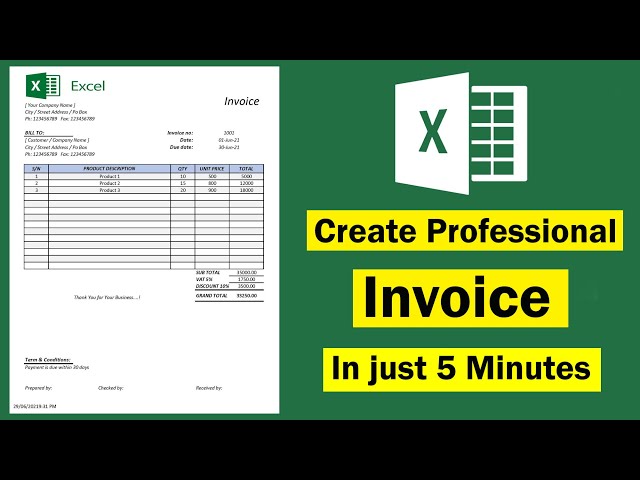
An invoice template is a pre-designed form for recording financial transactions, typically used by businesses to bill customers for goods or services provided. It includes essential details like the seller’s information, the customer’s details, a description of the goods or services, and the amount owed.
Invoice templates streamline and professionalize the billing process, ensuring accuracy and consistency. They also enhance the company’s brand image and provide a clear record of transactions for both parties. Historically, invoices have evolved from handwritten documents to the current digital formats, making them easier to create, send, and track.
This article will provide a comprehensive guide on how to create an effective invoice template, covering essential elements, best practices, and tips for optimizing your invoice templates for efficiency and impact.
Create an Invoice Template
Creating an effective invoice template is crucial for businesses to streamline billing, ensure accuracy, and enhance their professional image. Here are 10 key aspects to consider:
- Company Information
- Customer Details
- Invoice Number
- Invoice Date
- Due Date
- Payment Terms
- Item Description
- Quantity
- Unit Price
- Total Amount
These aspects are interconnected and play vital roles in creating a functional and informative invoice template. For instance, the company information and customer details establish the parties involved in the transaction, while the invoice number and date provide unique identification and a reference point. The payment terms clearly outline the conditions for settling the invoice, and the item description, quantity, unit price, and total amount provide a detailed breakdown of the goods or services provided. By carefully considering these aspects, businesses can create invoice templates that are both efficient and effective.
Company Information
Company Information is a crucial aspect of creating an invoice template, as it establishes the identity and credibility of the business providing the goods or services. It typically includes the company name, address, contact details, and tax identification number.
-
Business Name
The legal or trading name of the company issuing the invoice. -
Business Address
The physical or registered address of the company, including street address, city, state, and postal code. -
Contact Details
Phone numbers, email addresses, and website address, allowing customers to easily reach the company for inquiries or support. -
Tax Identification Number
Often required for tax reporting purposes, such as a VAT number or Employer Identification Number (EIN).
By including accurate and up-to-date Company Information on invoices, businesses establish trust and legitimacy. It also ensures that customers have the necessary contact information to make payments, ask questions, or resolve any issues related to the invoice or transaction.
Customer Details
Customer Details are a critical aspect of invoice templates, as they establish the recipient of the invoice and provide essential information for processing payments and managing accounts.
-
Customer Name
The legal or trading name of the customer or business receiving the invoice. -
Customer Address
The physical or registered address of the customer, including street address, city, state, and postal code. -
Contact Information
Phone numbers, email addresses, and website address, allowing businesses to easily reach the customer for inquiries or support. -
Customer Account Number
An optional but useful field that can be used to identify the customer’s account for easy reference and reconciliation.
By including accurate and up-to-date Customer Details on invoices, businesses ensure that invoices are delivered to the correct recipient and that payments are processed efficiently. It also allows for effective communication and follow-up regarding the invoice or any related matters.
Invoice Number
An invoice number is a unique identifier assigned to each invoice, serving as a critical element in creating an invoice template. It enables efficient tracking, organization, and retrieval of invoices, facilitating smoother business operations.
-
Format and Structure
Invoice numbers can follow various formats, often comprising a combination of letters and numbers, or a sequential numbering system. They should be unique, easy to understand, and aligned with the company’s invoicing system. -
Prefix and Suffix
Some businesses use prefixes or suffixes to categorize invoices based on factors such as the year, project, or customer type. Prefixes like “INV” or “IN” can indicate the invoice type, while suffixes like “-001” can denote the sequential number within a series. -
Sequential Generation
Sequential invoice numbering is a common practice, ensuring chronological order and preventing duplicate numbers. Assigning the next consecutive number to each new invoice simplifies tracking and reduces the risk of errors. -
Legal and Regulatory Compliance
In some jurisdictions, businesses may be required to follow specific invoicing regulations. Invoice numbers play a role in ensuring compliance, as they provide a clear audit trail and support accurate accounting practices. Complying with such regulations enhances credibility and minimizes legal risks.
By incorporating these facets into an invoice template, businesses create a robust system for invoice management. Invoice numbers become valuable tools for organizing financial records, streamlining communication, and ensuring efficient processing of payments.
Invoice Date
In the context of creating an invoice template, the Invoice Date holds significant importance. It serves as a pivotal reference point for various aspects of invoicing and plays a crucial role in ensuring accurate accounting and timely payments.
-
Date of Issuance
The Invoice Date typically represents the day on which the invoice is created and issued to the customer. It establishes the starting point for payment terms and late payment calculations. -
Transaction Date
In some cases, the Invoice Date may coincide with the date on which the goods or services were provided or the transaction occurred. This alignment simplifies record-keeping and provides a clear reference for both parties. -
Taxation and Compliance
The Invoice Date can have implications for tax calculations and compliance. In certain jurisdictions, the tax liability may depend on the date of invoice issuance or the date of the underlying transaction. Accurate invoice dating ensures adherence to tax regulations and avoids potential legal issues. -
Payment Terms
The Invoice Date is closely tied to the payment terms specified on the invoice. It serves as the anchor point for calculating due dates, early payment discounts, and late payment penalties. Clear and accurate invoice dating facilitates timely payments and minimizes disputes.
These facets of the Invoice Date collectively contribute to the efficiency, accuracy, and legal compliance of an invoice template. By understanding and incorporating these aspects, businesses can create effective invoice templates that streamline their billing processes and maintain healthy financial relationships with their customers.
Due Date
In the realm of invoice template creation, the Due Date holds a prominent position. It signifies the date by which payment for the goods or services rendered is expected from the customer. Establishing a clear Due Date is critical for several reasons. Firstly, it sets a timeframe for payment, ensuring timely cash flow for the business. Secondly, it communicates the payment expectations to the customer, fostering transparency and accountability.
The Due Date is often calculated based on the Invoice Date, with a standard payment period added. This payment period can vary depending on industry norms, business policies, and the agreed-upon terms between the parties involved. However, it’s crucial to ensure that the Due Date is realistic and aligned with the customer’s payment cycle to avoid potential delays or disputes.
In practice, the Due Date serves as a crucial reference point for both the business and the customer. For the business, it helps track accounts receivable, identify overdue payments, and initiate follow-up actions. For the customer, it provides clarity on the expected payment timeline, allowing them to plan their finances and avoid late payment penalties. Effective invoice templates incorporate a prominent display of the Due Date, making it easily visible and understandable to all parties involved.
Payment Terms
In crafting an effective invoice template, “Payment Terms” play a pivotal role. These terms outline the conditions and expectations for settling the invoice, ensuring clarity and minimizing payment delays. They specify the accepted payment methods, the timeline for payment, and any applicable discounts or penalties.
Payment Terms directly impact the cash flow and financial management of a business. Clear and well-defined terms facilitate timely payments, reduce the risk of bad debts, and streamline accounting processes. Conversely, poorly defined or ambiguous Payment Terms can lead to confusion, delayed payments, and potential disputes.
Real-life examples abound. The most common Payment Term is “Net 30,” indicating that payment is due within 30 days of the invoice date. Other common terms include “Due on Receipt,” “Cash on Delivery,” and “2% Discount for Early Payment.” The choice of Payment Terms depends on industry norms, business policies, and the bargaining power of the parties involved.
Understanding the connection between Payment Terms and invoice template creation is crucial for businesses of all sizes. It enables them to optimize their billing processes, improve cash flow management, and foster stronger relationships with their customers. By incorporating clear and appropriate Payment Terms into their invoice templates, businesses can increase efficiency, reduce financial risks, and maintain a healthy financial position.
Item Description
An indispensable aspect of crafting an effective invoice template is the Item Description, which serves as the foundation for accurately capturing the goods or services provided to the customer. A well-defined Item Description not only ensures clarity in communication but also facilitates efficient processing and record-keeping.
-
Product/Service Name
The Item Description should clearly state the name of the product or service being invoiced. This serves as the primary identifier and should be concise yet descriptive enough to avoid confusion.
-
Quantity and Units
Accurately specifying the quantity and units of the product or service is crucial. This information ensures that the customer is billed for the correct amount and facilitates inventory management for the business.
-
Unit Price
The Unit Price refers to the cost of a single unit of the product or service. This value, when multiplied by the quantity, determines the line item total. Clear and accurate Unit Prices are essential for calculating the total invoice amount.
-
Additional Specifications
In certain cases, it may be necessary to include additional specifications or attributes of the product or service. This could involve details such as color, size, model number, or any other relevant characteristics.
In summary, the Item Description plays a multi-faceted role in creating an effective invoice template. By providing a clear and detailed description of the goods or services, businesses can ensure accurate billing, streamline their invoicing processes, and maintain transparent communication with their customers.
Quantity
Within the context of creating an invoice template, the aspect of “Quantity” plays a pivotal role in ensuring accuracy and clarity in billing. It represents the number of units of a product or service provided to the customer, and its precise specification is crucial for both effective invoicing and efficient inventory management.
-
Unit of Measurement
The unit of measurement defines the standard unit in which the quantity is expressed. It could be pieces, hours, kilograms, or any other relevant unit, ensuring consistency and clarity in the invoice.
-
Itemization
When invoicing for multiple products or services, each item should have its own quantity specified. This itemization enables accurate pricing and billing, as well as efficient tracking of inventory levels.
-
Partial Quantities
In certain scenarios, it may be necessary to invoice for partial quantities, such as when a product is sold in fractions or when services are rendered over a period of time. Accurate specification of partial quantities ensures fair and precise billing.
-
Rounding and Estimation
In some cases, it may be impractical or unnecessary to specify exact quantities, especially when dealing with large volumes or approximate measurements. Rounding or estimation techniques can be employed to simplify the invoicing process while maintaining reasonable accuracy.
Overall, the inclusion of “Quantity” as a key aspect of invoice template creation allows businesses to generate clear, accurate, and comprehensive invoices that accurately reflect the goods or services provided to their customers. It facilitates efficient inventory management, streamlines billing processes, and minimizes errors or disputes related to quantity discrepancies.
Unit Price
Unit Price holds a crucial position within the context of creating an invoice template. It represents the monetary value assigned to a single unit of the product or service being invoiced. Establishing a clear and accurate Unit Price is essential for various reasons, primarily because it directly impacts the total amount due from the customer. A well-defined Unit Price ensures that the customer is charged fairly for the goods or services received, fostering trust and transparency in the business transaction.
In real-life scenarios, Unit Price plays a pivotal role in determining the overall cost of an invoice. For instance, if a business provides consulting services and charges a Unit Price of $100 per hour, the total amount invoiced for 5 hours of work would be $500. Accurate Unit Prices are not only crucial for calculating the correct invoice amount but also serve as a basis for comparing prices with competitors and making informed purchasing decisions. Furthermore, Unit Prices can be used for inventory valuation and budgeting purposes, enabling businesses to manage their financial resources effectively.
Understanding the connection between Unit Price and invoice template creation is vital for businesses of all sizes. By incorporating clear and appropriate Unit Prices into their invoice templates, businesses can streamline their billing processes, minimize errors, and maintain a healthy financial position. Accurate Unit Prices contribute to efficient cash flow management, reduced risk of disputes, and enhanced customer satisfaction. Moreover, businesses can leverage Unit Prices to implement pricing strategies, offer discounts or promotions, and optimize their revenue generation.
Total Amount
Within the context of creating an invoice template, the “Total Amount” holds immense significance as the culmination of all the individual line items and calculations. It represents the total sum of money owed by the customer for the goods or services provided. Establishing a clear and accurate Total Amount is crucial for several reasons. Firstly, it serves as the primary basis for payment and ensures that the customer is billed for the correct amount. A well-defined Total Amount fosters trust and transparency between the business and its customers.
In real-life scenarios, the Total Amount plays a pivotal role in determining the financial outcome of a transaction. For instance, if a customer purchases multiple products from an online retailer, the Total Amount would represent the sum of the individual product prices, including any applicable taxes or discounts. Accurate Total Amounts are not only essential for ensuring timely payments but also serve as a valuable metric for businesses to track their revenue and monitor their financial performance.
Understanding the connection between the Total Amount and creating an invoice template is vital for businesses of all sizes. By incorporating clear and precise Total Amounts into their invoice templates, businesses can streamline their billing processes, minimize errors, and enhance their cash flow management. Accurate Total Amounts contribute to efficient financial operations, reduced risk of disputes, and improved customer satisfaction. Moreover, businesses can leverage Total Amounts for budgeting and forecasting purposes, enabling them to make informed decisions and optimize their financial strategies.
Frequently Asked Questions
This section addresses common questions and concerns regarding the creation of invoice templates, providing clear and concise answers. These FAQs aim to clarify key aspects and anticipate potential queries, empowering readers with the knowledge they need to create effective and professional invoice templates.
Question 1: What are the essential elements of an invoice template?
An effective invoice template should include essential elements like the company name and contact details, customer information, invoice number, invoice date, due date, payment terms, item description, quantity, unit price, and total amount. Each element plays a crucial role in ensuring clarity, accuracy, and legal compliance.
In summary, these FAQs provide valuable insights into the creation of invoice templates, addressing common questions and clarifying important aspects. By understanding these key considerations, businesses can create professional and efficient invoice templates that streamline their billing processes, improve cash flow management, and enhance customer satisfaction. The next section of this article will delve deeper into the best practices for designing and implementing effective invoice templates.
Transition: Explore best practices for creating invoice templates to maximize their effectiveness and optimize your billing processes.
Tips for Creating Effective Invoice Templates
This section provides actionable tips to help you create invoice templates that are both efficient and professional. By following these tips, you can streamline your billing processes, improve cash flow management, and enhance customer satisfaction.
Tip 1: Use a clear and consistent design.
Your invoice template should be easy to read and understand. Use a consistent font and layout throughout the document. Avoid using too many colors or graphics, as this can make the invoice difficult to read.
Tip 2: Include all necessary information.
Your invoice should include all of the information that your customers need to process and pay it. This includes your company name and contact information, the customer’s name and contact information, the invoice number, the invoice date, the due date, the payment terms, and the itemized list of goods or services provided.
Tip 3: Use clear and concise language.
The language on your invoice should be clear and concise. Avoid using technical jargon or abbreviations that your customers may not understand. Use plain English and be specific about the goods or services that you are providing.
Tip 4: Proofread your invoice before sending it.
Before you send your invoice to your customer, proofread it carefully for any errors. Check for typos, incorrect information, and missing details. Sending an invoice with errors can delay payment and damage your professional image.
Tip 5: Use an automated invoicing system.
If you send a high volume of invoices, consider using an automated invoicing system. This can save you time and money, and it can help you to avoid errors. There are many different automated invoicing systems available, so you can find one that fits your needs and budget.
Summary:
By following these tips, you can create invoice templates that are both efficient and professional. This can help you to streamline your billing processes, improve cash flow management, and enhance customer satisfaction.
Transition:
In the next section, we will discuss the benefits of using effective invoice templates.
Conclusion
Creating an effective invoice template is crucial for businesses to streamline billing processes, ensure accuracy, enhance their professional image, and improve cash flow management. This article has provided a comprehensive guide on how to create an invoice template, covering essential elements, best practices, and tips for optimizing its effectiveness.
Key points discussed include the importance of including all necessary information, using clear and concise language, proofreading carefully before sending, and considering an automated invoicing system for high-volume invoicing. By incorporating these elements and following the best practices outlined in this article, businesses can create invoice templates that are both efficient and professional.